
 Any questions? Ask in Whatsapp

Real Estate Websites
Designed For Deals

 SPEAK TO AN EXPERT
Websites
Grow your business with a high performance real estate website.
Websites That Turn Clicks Into Clients
Designed to Win More Deals
Luxury design and intuitive experiences that inspire action.
Built for Premium Brands
Luxury design and intuitive experiences that inspire action.
Found Everywhere Your Customers Search
SEO, GEO and AI-optimised websites that maximise search visibility.
Connected to Your Sales Team
Integrate your website with your CRM enabling faster follow-up and tracking from lead to sale.
Real Estate Website Services
Website Strategy
UX & UI Design
Custom Website Design
Property Listing Integration
Website Hosting & Support
 SPEAK TO AN EXPERT
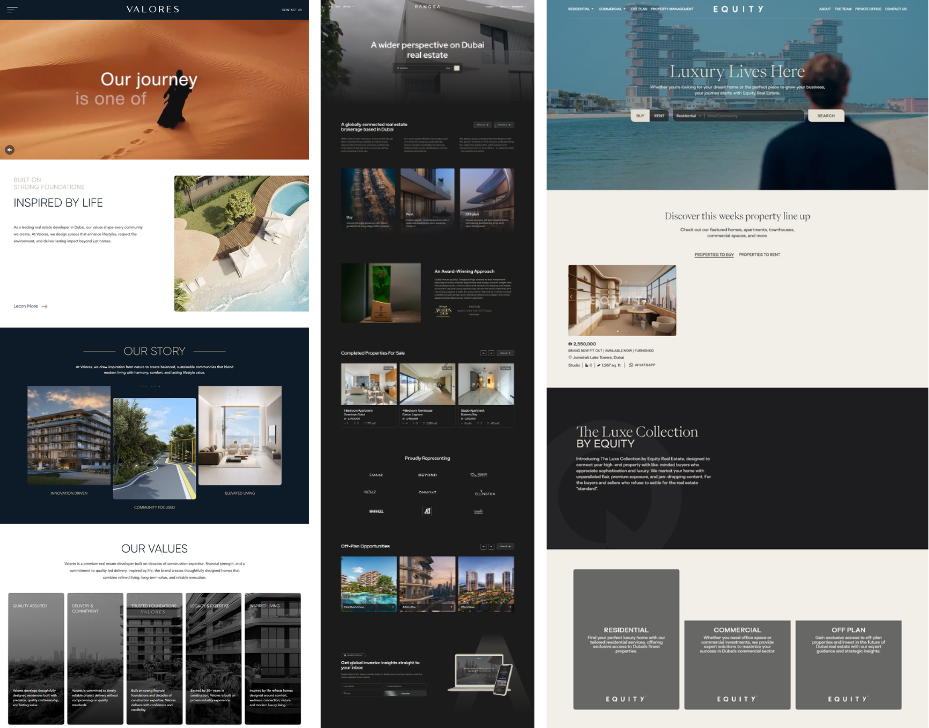
How We Create Your Winning Website
01 Strategy
Define your objectives, audience, user journeys and conversion strategy.

02 Design
Premium web experiences that reflect your brand.
03 Develop
Fast, secure websites built for CRM, SEO and AI.
04 Launch & Optimise
Monitor performance, improve UX and boost conversions.
READY TO BUILD A WEBSITE THAT SELLS?

 SPEAK TO AN EXPERT
Have Questions ?
What makes a high-performing real estate website?
A high-performing real estate website does more than display listings. It should load quickly, work well on mobile, make search and navigation easy, highlight properties clearly, and guide visitors into an enquiry or next step without friction. Performance and conversion need to be designed together.
What features should a real estate website include?
The most useful features usually include property pages, map-based search, lead forms, landing pages, CMS editing, blog capability, analytics, and integrations with CRM and property portals. SOLD’s own page also highlights real estate-specific tools such as AI-driven capture, responsive design, and built-in SEO.
How much does a real estate website cost in Dubai?
Website cost depends on complexity. A simple brochure-style site may sit at the lower end, while a larger platform with custom design, CRM integration, bilingual content, advanced search, and automated listing workflows will require a bigger budget. The right question is not only cost, but what the site needs to generate in leads and efficiency.
Do I need CRM and portal integrations on a property website?
If the website is meant to support lead generation and sales operations, yes. CRM and portal integrations help sync listings, route enquiries, track leads properly, reduce manual work, and create a smoother buyer experience from first visit to sales follow-up.
Should a real estate website be built for SEO from day one?
Absolutely. SEO should be part of the structure, content model, page templates, and technical setup from the start, not bolted on later. A site that is fast, crawlable, mobile-friendly, and built around real search intent is far easier to grow than one that needs structural fixes after launch.
Do real estate websites in Dubai need to be bilingual?
For many brands, yes. An Arabic-English website can help you serve both local and international audiences more effectively, especially in a market like Dubai where buyer enquiry often spans different languages and nationalities. The key is to build multilingual content properly rather than relying on thin or automated page duplication.
A high-performing real estate website does more than display listings. It should load quickly, work well on mobile, make search and navigation easy, highlight properties clearly, and guide visitors into an enquiry or next step without friction. Performance and conversion need to be designed together.
The most useful features usually include property pages, map-based search, lead forms, landing pages, CMS editing, blog capability, analytics, and integrations with CRM and property portals. SOLD’s own page also highlights real estate-specific tools such as AI-driven capture, responsive design, and built-in SEO.
Website cost depends on complexity. A simple brochure-style site may sit at the lower end, while a larger platform with custom design, CRM integration, bilingual content, advanced search, and automated listing workflows will require a bigger budget. The right question is not only cost, but what the site needs to generate in leads and efficiency.
If the website is meant to support lead generation and sales operations, yes. CRM and portal integrations help sync listings, route enquiries, track leads properly, reduce manual work, and create a smoother buyer experience from first visit to sales follow-up.
Absolutely. SEO should be part of the structure, content model, page templates, and technical setup from the start, not bolted on later. A site that is fast, crawlable, mobile-friendly, and built around real search intent is far easier to grow than one that needs structural fixes after launch.
For many brands, yes. An Arabic-English website can help you serve both local and international audiences more effectively, especially in a market like Dubai where buyer enquiry often spans different languages and nationalities. The key is to build multilingual content properly rather than relying on thin or automated page duplication.